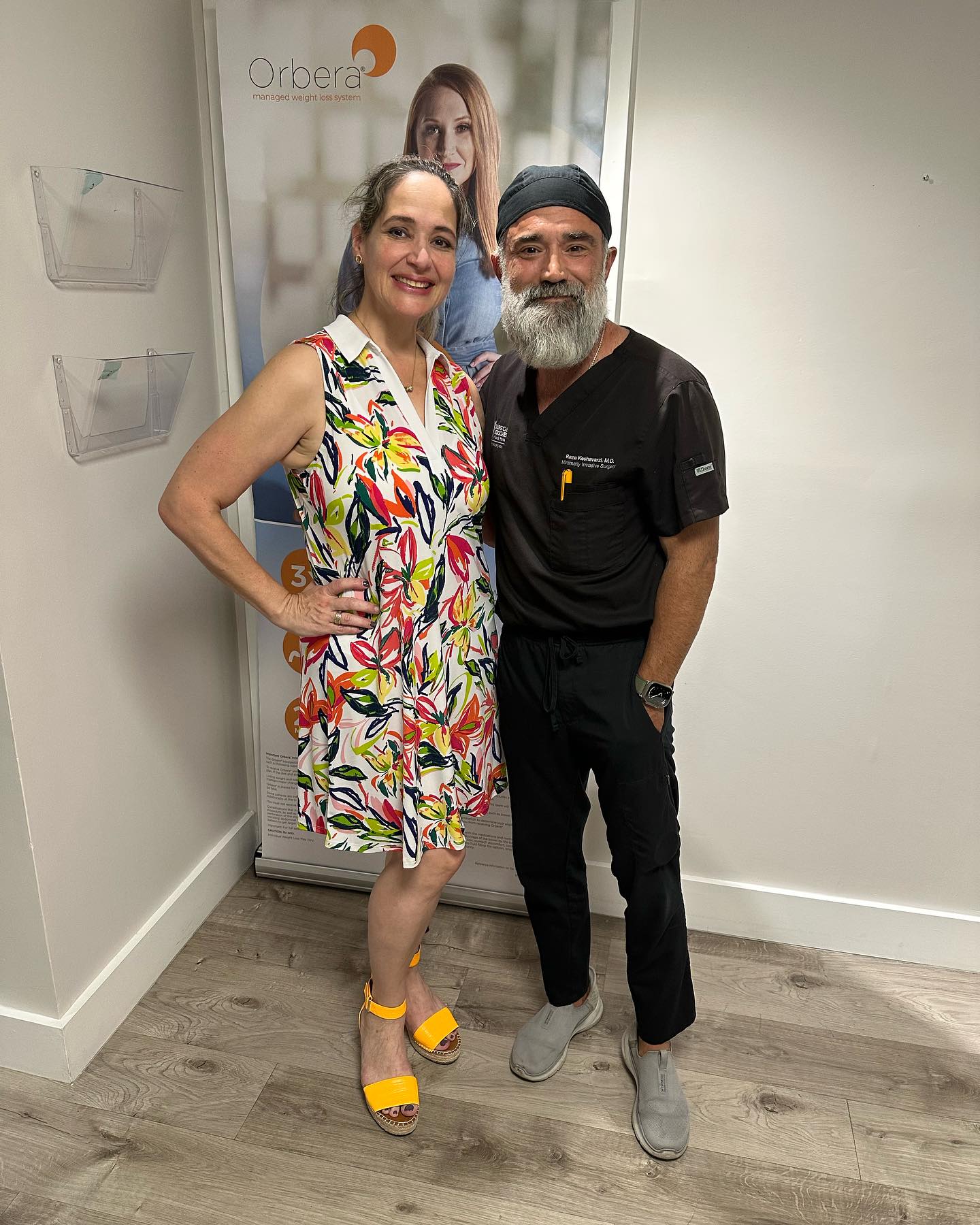
Dr. Reza Keshavarzi, a fellowship-trained bariatric surgeon, performs gastric bypass for South Miami patients and stays personally involved from your first visit through follow-up.
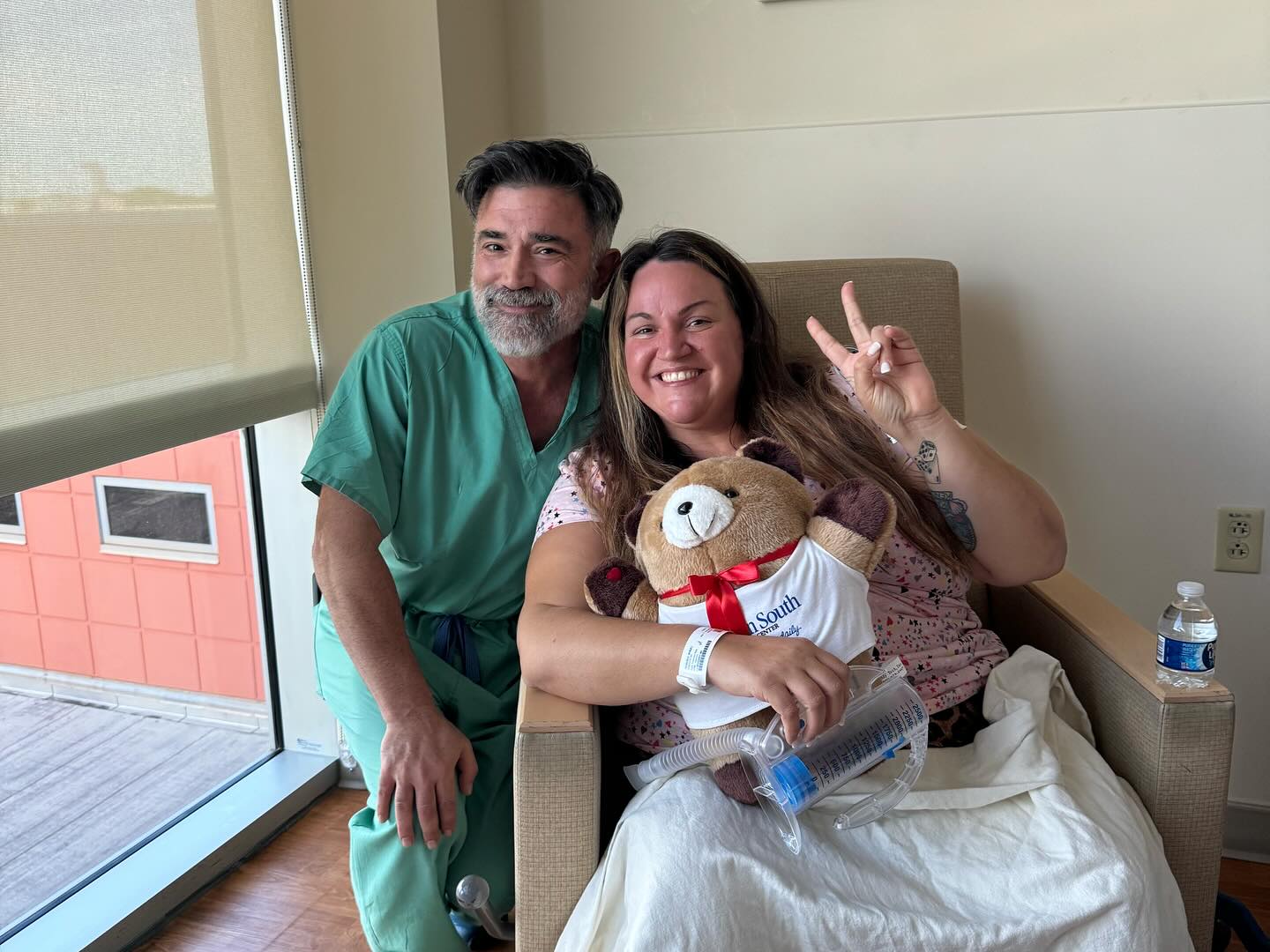
Gastric bypass, also called Roux-en-Y gastric bypass, changes how much you can eat and how your body processes food. Dr. K performs it as a minimally invasive operation through small incisions, using the laparoscopic and robotic techniques he trained in during his bariatric fellowship.
The top of the stomach is divided to form a pouch about the size of an egg. It fills quickly, so meals get smaller and fullness comes sooner.
The pouch is joined to a lower loop of the small intestine. Food skips the rest of the stomach and the first stretch of intestine, so fewer calories are absorbed.
Rerouting food changes the hormones that drive hunger and blood sugar. That effect is why bypass is often discussed for patients with type 2 diabetes.
No part of your stomach is removed. Unlike the gastric sleeve, the bypassed stomach stays in place and keeps making the digestive juices your intestine still uses.
Dr. K performs every weight loss procedure we offer, from the ORBERA gastric balloon to gastric bypass. Your recommendation is built around your health, not around a single operation.
He also combines GLP-1 medication, nutrition coaching and long-term follow-up with surgery when that mix gives you a better chance of keeping the weight off. The table shows where bypass fits among the options.
Our approach: the right treatment, or the right combination of treatments, for each patient.
| Procedure | How it works | Often considered for |
|---|---|---|
| Gastric Bypass This page | A small stomach pouch connected to a lower part of the small intestine, limiting both portion size and absorption. | Ongoing acid reflux, type 2 diabetes, or a larger amount of weight to lose. |
| Gastric Sleeve | Most of the stomach is removed, leaving a narrow sleeve. The intestines are not rerouted. | Patients who want significant weight loss with a simpler change to their anatomy. |
| Low BMI Mini Sleeve | A sleeve procedure planned for patients with less weight to lose. | Patients carrying excess weight who are below the usual range for bariatric surgery. |
| Endoscopic Sleeve Gastroplasty | Sutures placed through an endoscope reduce the stomach from the inside, with no incisions. | Patients who prefer a nonsurgical procedure. |
| ORBERA Gastric Balloon | A temporary balloon placed in the stomach takes up space so you feel full sooner. | A nonsurgical start for patients with a moderate amount to lose. |
| Medical Weight Loss | A personalized plan that can include weight loss injections, nutrition and exercise guidance. | Patients not ready for a procedure, or as support before and after surgery. |
Gastric bypass is a bigger change than the sleeve, so Dr. K recommends it when its particular strengths match your health. Your history, medications and goals decide the procedure.
That decision is made together at your consultation, and you leave knowing which option he recommends and why.
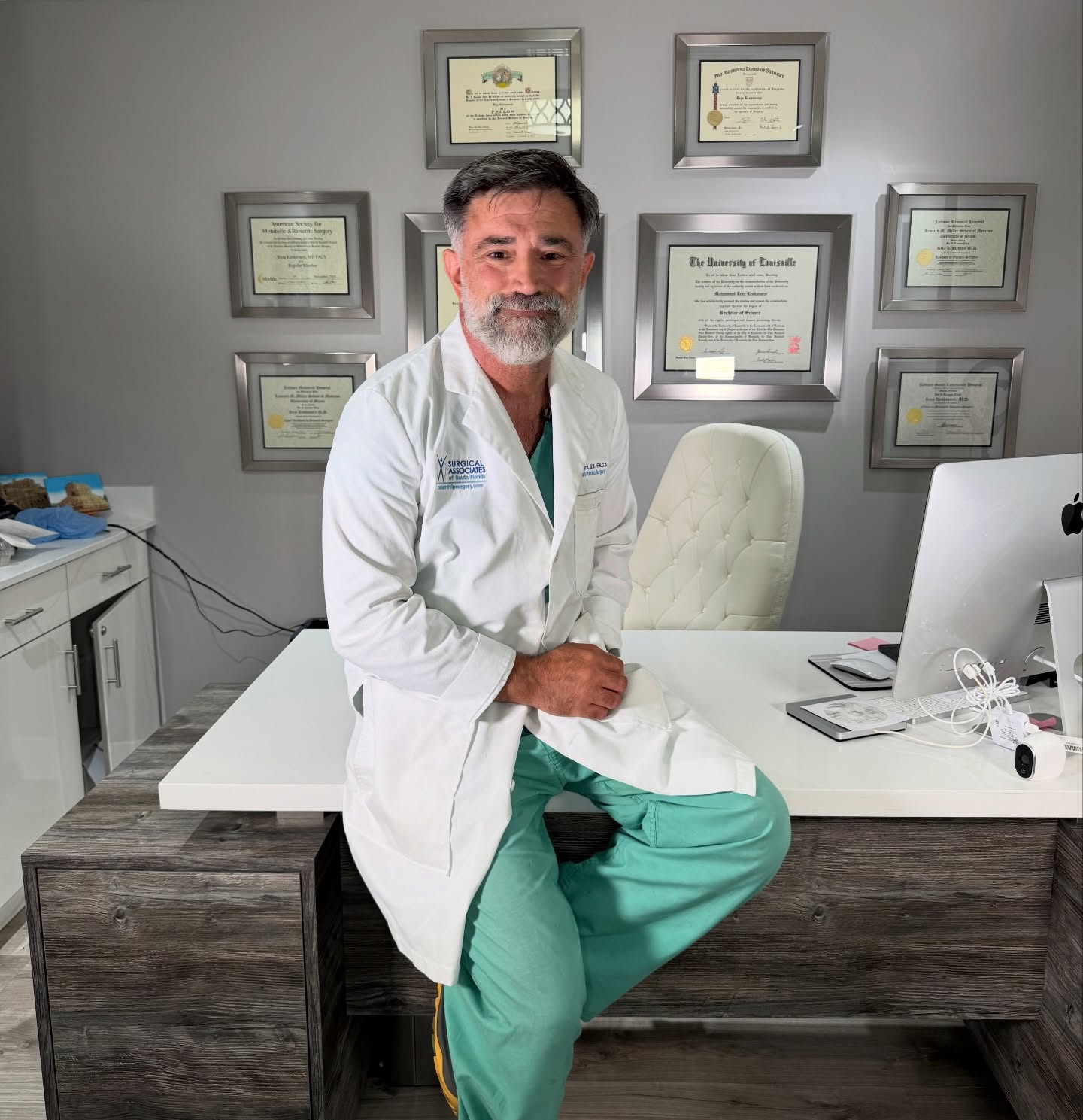
MD, FACS, FASMBS. Board-certified bariatric surgeon.
Dr. Reza Keshavarzi, known to patients as Dr. K, performs gastric bypass along with every other surgical and nonsurgical weight loss option we offer. He completed his surgical residency at Jackson Memorial Hospital and a fellowship in laparoscopic, bariatric and robotic surgery at Jackson South Medical Center.
After surgery, patients reach Dr. K on his own cell phone, a detail several of our reviewers mention.
Our team supports you through every part of preparing for surgery, and how quickly you reach a surgery date depends mostly on finishing your pre-op testing.
Dr. K reviews your history and goals, explains whether bypass or another option fits best, and goes over costs and financing.
You complete medical clearances and an upper endoscopy, or EGD. Dr. K can perform the EGD, or a recent one from elsewhere may be used.
You follow a pre-surgery diet. Weight loss injections are stopped at least two weeks before your surgery date.
Dr. K performs your bypass through small incisions, followed by a short hospital stay while you start sipping liquids and walking.
Regular visits track your progress, diet stages, vitamins and lab work, with Dr. K involved long after surgery day.
Dr. K practices what he recommends: staying active, eating well and moving every day.
Recovery follows a clear sequence, and our diet plans walk you through each stage of eating again.
You walk soon after surgery and take small, frequent sips of clear liquids. Most patients go home after a short hospital stay.
Most patients return to work within 4 to 7 days. Avoid lifting anything heavier than 20 pounds while you heal.
Your diet moves from protein shakes and liquids to purees and then soft foods, with protein first at every meal.
Regular foods return in small portions. Daily movement, vitamin and mineral supplements and follow-up visits become part of your routine for life.
★★★★★"I can't say enough about how great his bedside manner, his attentiveness to care and his follow through with my case."
Ali S.Bariatric patient, Google review
★★★★★"He has been there for me from the beginning of my journey until now."
Sherly G.Gastric sleeve patient, Google review
★★★★★"From my 1st visit he made me feel at ease with my decision to pursue bariatric surgery."
YesiBariatric patient, Google review
4.9 out of 5 from 80 Google reviews
Your gastric bypass price is confirmed at your consultation, once Dr. K has decided bypass is the right procedure and reviewed what your surgery will involve. We explain what your quote covers before you commit.
When Dr. K performs your pre-op endoscopy, the procedure itself is included in your surgical cost, with only the hospital fee billed separately.
Plans available with 24 months at 0% interest
 Apply with Cherry to spread the cost of surgery into monthly payments.
A sleeve removes most of the stomach and leaves the intestines as they are. Gastric bypass removes no stomach at all: it creates a small pouch and connects it to a lower part of the small intestine, so it limits both how much you eat and how many calories you absorb. Dr. K performs both and will tell you which one fits your health at your consultation.
Most patients go home after a short hospital stay and return to work within 4 to 7 days. You should not lift more than 20 pounds while you heal. Your diet moves from liquids to soft foods to regular foods over the first several weeks, with our team guiding each stage.
Bypass is often the procedure surgeons favor for patients with ongoing acid reflux, and its effect on gut hormones is why it is frequently discussed for type 2 diabetes. Whether it is right for you depends on your full medical history. Dr. K reviews your conditions and medications before recommending a procedure.
Weight loss injections must be stopped at least two weeks before surgery. Dr. K may still use GLP-1 medication as part of your overall plan before or after surgery when it helps. He will set the timing with you.
Yes. Because food bypasses part of the small intestine, your body absorbs fewer vitamins and minerals, so supplements are a lifelong part of life after bypass. Regular follow-up visits and lab work help keep your levels where they should be.
Yes. An upper endoscopy, called an EGD, and medical clearances are required before surgery. Dr. K can perform the EGD himself, and the procedure is then included in your surgical cost. A recent endoscopy done elsewhere can also be accepted.
Your consultation, pre-op planning and follow-up visits for gastric bypass take place at Miami VIP Surgery on SW 62nd Place, close to Coral Gables, Pinecrest and Kendall.