
Roux-en-Y gastric bypass with Dr. Reza Keshavarzi, a board-certified, fellowship-trained bariatric surgeon whose South Miami office is a direct drive from Miramar down I‑75 and the Palmetto Expressway.
Gastric bypass changes both how much you can eat and how your body handles what you eat. Dr. K trained in laparoscopic, bariatric and robotic surgery, and bypass is one of six weight loss procedures he performs.
The top of the stomach is divided to form a pouch roughly the size of an egg. It fills after a few bites, so portions shrink without a daily fight against hunger.
A section of small intestine is connected straight to the pouch. Food skips most of the stomach and the first part of the small intestine, so fewer calories are absorbed.
The rerouting also shifts gut hormones that drive appetite and blood sugar. That is one reason bypass is often discussed for patients living with type 2 diabetes.
Dr. K recommends a procedure after he reviews your health, not before. Bypass is often the stronger fit when several of these describe you.
Most patients weighing a bypass are also considering a sleeve. Both are performed by Dr. K, and the difference comes down to what changes inside.
| Gastric Bypass | Gastric Sleeve | |
|---|---|---|
| What changes | A small pouch is created and connected to a rerouted section of small intestine. | About 75 to 80 percent of the stomach is removed, leaving a narrow tube. |
| How it works | Smaller portions, fewer calories absorbed and changes in appetite hormones. | Smaller portions and changes in appetite hormones. Digestion follows its usual path. |
| Often considered for | More weight to lose, type 2 diabetes or severe acid reflux. | Patients who want a simpler change without intestinal rerouting. |
| Nutrition after | Daily vitamins and minerals for life, with regular lab checks. | Daily vitamins for life, usually with a simpler routine. |
| Options here | Roux-en-Y gastric bypass. | Standard sleeve, the low BMI Mini Sleeve and a teen sleeve for ages 14 to 17. |
Dr. K walks through both with you and recommends the one that fits your health history and goals.
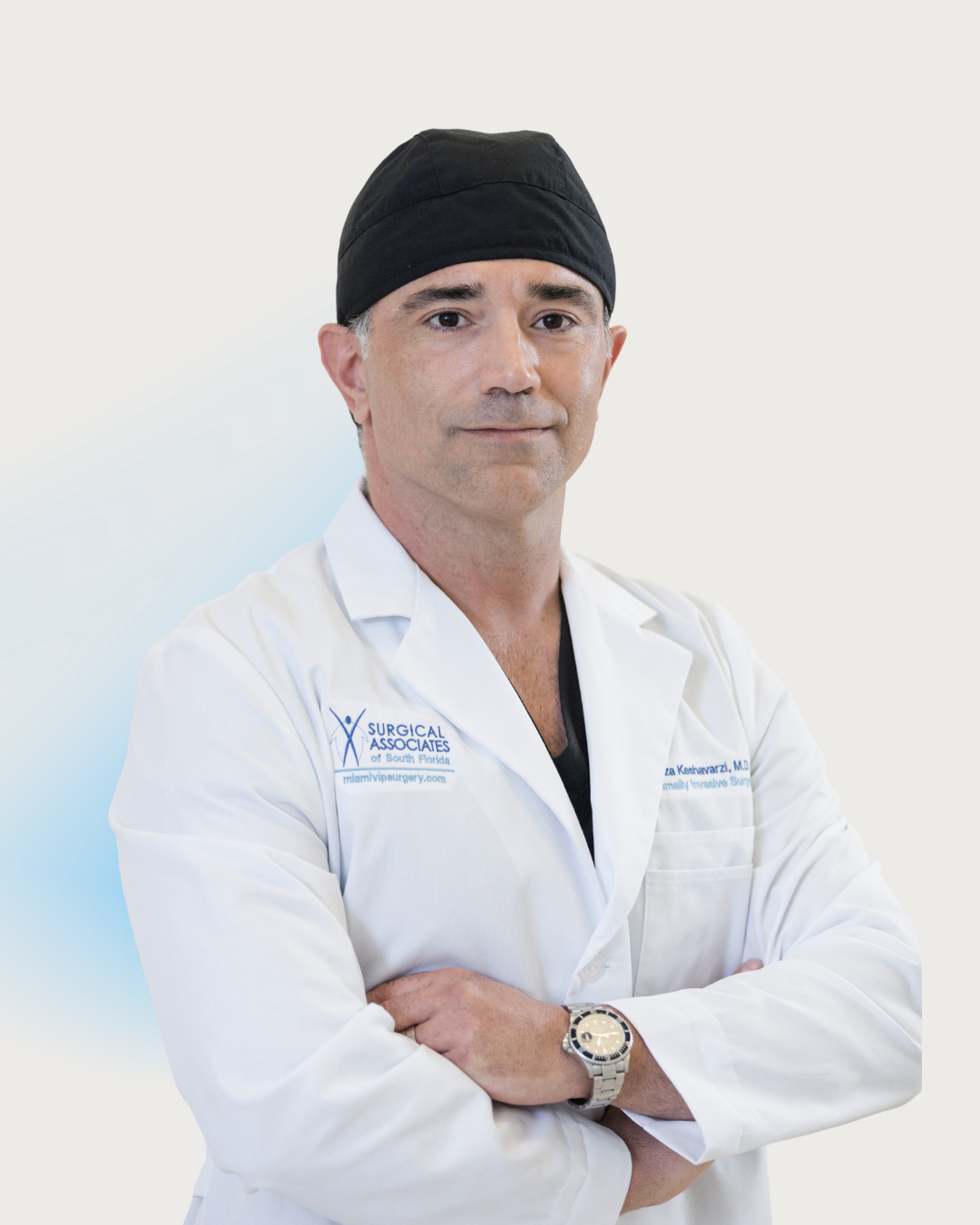
Dr. Reza Keshavarzi, known to patients as Dr. K, is a board-certified bariatric surgeon with decades of experience in bariatric and minimally invasive surgery. He completed his surgical residency at Jackson Memorial Hospital and a fellowship in laparoscopic, bariatric and robotic surgery at Jackson South Medical Center.
He earned his medical degree with High Distinction from the University of Kentucky College of Medicine after graduating Summa Cum Laude from the University of Louisville. After surgery he stays reachable: patients hear from him directly, from his own cell phone.
Bypass is one part of a longer plan. Dr. K builds yours from the treatments that fit your health, and combines them when that serves you better than surgery alone.
Used when appropriate to control appetite and start weight loss, paused before surgery.
Guidance through each diet stage after bypass, toward habits that last.
Help with emotional eating and the behavior changes surgery cannot make for you.
Ongoing contact after you go home, because recovery is the start of the work.
How quickly you reach surgery depends mostly on how fast your tests are completed. Here is the path from first visit to recovery.
You meet Dr. K, review your health and goals, and compare bypass with the other options. You leave knowing what he recommends and why.
Surgery requires medical clearances and an upper endoscopy. Tests can be done with us or near home in Miramar, and an EGD from the past 5 months counts.
A pre-surgery diet readies your body for the operation. Weight loss injections are stopped at least 2 weeks before your date.
Dr. K performs your bypass in the hospital. A short hospital stay follows so your care team can monitor your first steps.
Our bariatric patients typically return to work 4 to 7 days after surgery and avoid lifting more than 20 lbs while they heal.

Your new pouch needs a gradual return to solid food. Dr. K and our team guide each stage.
From my 1st visit he made me feel at ease with my decision to pursue bariatric surgery. He has been there the whole process, provided his cell phone to make sure he could be reached at all hours.Yesi, Google review
The doctor was very straightforward and honest and extremely professional.Pat Cutting, Google review
Dr. Keshavarzi is an outstanding physician, extremely knowledgeable, responsive, and genuinely committed to patient care.Jeff De La Cruz, Google review
Your price depends on your health history and the plan Dr. K recommends, so you receive an exact quote after your consultation rather than a number that may not apply to you. Here is how payment works.

We accept Cherry for surgery, with plans that include 24 months at 0% interest.
Review financing optionsDebit and credit cards are accepted for any balance not covered by financing.
When Dr. K performs your endoscopy, the procedure is included in your overall surgery cost. A $750 hospital fee applies.
Answers to what patients ask most before booking. Anything else, Dr. K covers at your consultation.
Approval starts with a consultation where Dr. K reviews your weight history, health conditions and past weight loss attempts. If bypass is the right fit, you complete medical clearances and an upper endoscopy (EGD). Once those results are back, your surgery date can be set.
Your price depends on your health history and the plan Dr. K recommends, so you receive an exact quote after your consultation. Financing through Cherry is available, including plans with 24 months at 0% interest, and debit or credit cards can cover the remaining balance.
For most patients the answer comes down to health rather than the scale: blood sugar, blood pressure, mobility and energy. Dr. K will tell you plainly whether bypass, a less invasive procedure or medical weight loss makes more sense for your goals.
Your consultation, surgery and follow-up are with Dr. K, whose office is in South Miami. Required tests, including the endoscopy, can be done at a facility closer to Miramar if you prefer, and an EGD from the past 5 months is accepted. That keeps the number of trips down.
Bypass is often considered when you have more weight to lose, type 2 diabetes or severe acid reflux, because it adds intestinal rerouting to a smaller stomach. A sleeve keeps the digestive path intact and is a simpler change. Dr. K compares both against your health history before recommending either.
Our bariatric patients typically return to work 4 to 7 days after surgery. You avoid lifting more than 20 lbs while you heal, and Dr. K sets your exact timeline based on your job and recovery.
GLP-1 injections such as semaglutide must be stopped at least 2 weeks before surgery. Dr. K may still use GLP-1 medication at other stages of your plan, and he tells you exactly when to pause and when, if ever, to restart.
Sit down with Dr. K, compare bypass with every other option, and leave with a clear recommendation and a quote.