
Your revision plan starts with Dr. Reza Keshavarzi, a board-certified, fellowship-trained bariatric surgeon who performs gastric bypass and upper endoscopy himself.
Gastric bypass revision is a treatment plan that corrects or updates a Roux-en-Y gastric bypass that no longer works the way it should. It can be a procedure, medical therapy, or both, depending on what changed.
Revision is not one operation. Depending on what testing shows, it can mean tightening the outlet, resizing the pouch, adjusting limb length, or adding medical therapy to the anatomy you already have. Dr. K performs gastric bypass and endoscopic procedures himself, so the evaluation weighs both routes rather than defaulting to one.
Patients usually seek a revision evaluation for one of the reasons below. Several often show up together, and each points testing in a different direction.
Regaining a meaningful share of the weight you lost, often while your eating habits have not changed much.
Portions that once filled you quickly no longer do, which can point to a stretched pouch or a widened outlet.
Heartburn, upper abdominal pain or nausea that began or worsened after your bypass and has not settled.
Food that feels stuck, frequent vomiting, or sweating and a racing heart after sweets, a pattern known as dumping.
Protein, iron, vitamin B12 or other levels that stay low even when you take your supplements as directed.
Blood sugar, blood pressure or sleep apnea that improved after surgery and is now creeping back.
Sudden, severe abdominal pain after a gastric bypass needs emergency care right away, not a scheduled visit. The signs above are the ones to bring to a planned evaluation.
The right path depends on what your testing finds, not on a preferred procedure. These are the broad categories Dr. K weighs with each patient.
| Approach | What it addresses | How it is done | Often a fit when |
|---|---|---|---|
| Medical supportNo procedure | Hunger and gradual regain without a major change in anatomy | A structured nutrition plan, regular follow-up and, when appropriate, GLP-1 medication | Endoscopy shows a pouch and outlet close to their intended size |
| Endoscopic revisionThrough the mouth | A widened outlet or a stretched pouch | A flexible scope passed through the mouth, with no abdominal incisions | Regain tracks with a stretched outlet and a smaller step makes sense first |
| Surgical revisionLaparoscopic | Pouch size, the outlet, limb length or other changes in anatomy | Laparoscopic surgery through small incisions | The anatomy needs more change than a scope can make, or symptoms point to a structural cause |
Many plans combine rows. A patient may start with medical weight loss while testing is completed, then add a procedure if the numbers call for it.
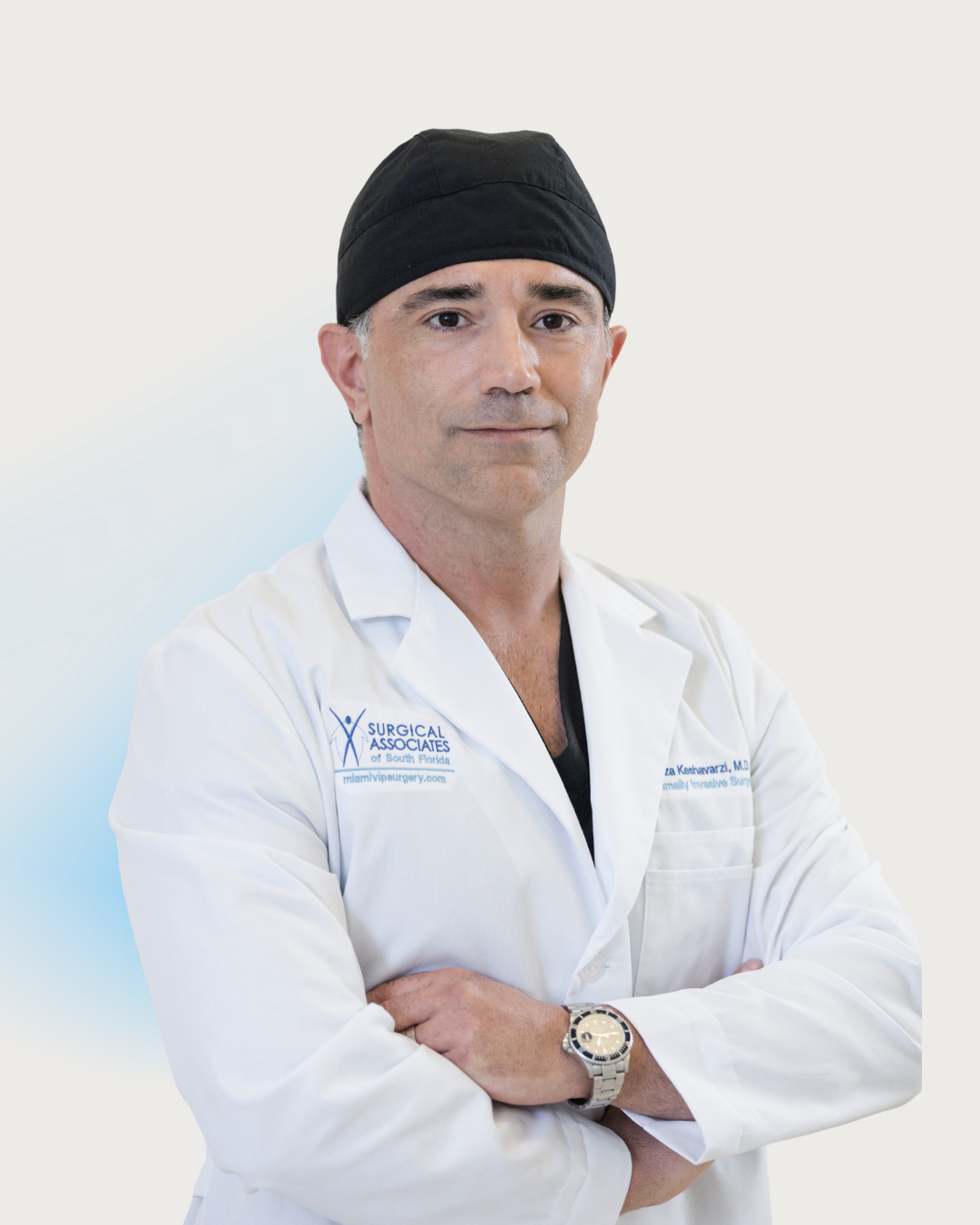
Dr. Reza Keshavarzi, known to patients as Dr. K, is a board-certified bariatric surgeon and a Diplomate of the American Board of Surgery. He completed his surgical residency at Jackson Memorial Hospital and a fellowship in laparoscopic, bariatric and robotic surgery at Jackson South Medical Center.
He performs gastric bypass, gastric sleeve and endoscopic sleeve gastroplasty, and he oversees medical weight loss. For a revision, that means one surgeon who can compare every option in person rather than referring you between specialists.
A revision decision rests on honest advice and on care that continues for years. Those are the themes our patients raise most often in their Google reviews.
The doctor was very straightforward and honest and extremely professional.
Pat CuttingGoogle review
His timely communication and expert guidance were instrumental in helping me reach my health goals.
Jeff De La CruzGoogle review
He has been there for me from the beginning of my journey until now.
Sherly GuillaumeGoogle review
Every revision follows the same order: understand what changed, confirm it with testing, then choose the smallest step that solves it.
Dr. K reviews your original operation, weight history, eating patterns and symptoms, and explains what testing needs to answer.
An upper endoscopy shows your pouch and outlet. Dr. K can perform it or review one done elsewhere, alongside labs and medical clearances.
Surgical plans include a pre-surgery diet. GLP-1 injections are stopped at least two weeks before the procedure.
After laparoscopic surgery, many patients return to desk work in 4 to 7 days and avoid lifting over 20 pounds while healing.
Follow-up visits, nutrition guidance and direct access to the team keep your result on track for the years ahead.
Revision belongs inside a plan rather than standing alone as a single fix. We pair the procedure that fits your anatomy with the support that keeps weight off, because the work continues after the operating room.
Revision pricing depends on whether you need medical support, an endoscopic procedure or surgery, so your quote follows the evaluation and testing rather than coming before them. Dr. K walks you through costs and financing options during your consultation.
Financing is available through Cherry, and you can review the details on our financing page before your visit.

Straight answers to the questions patients ask most before a revision evaluation.
Steady weight regain, less fullness at meals, or new symptoms such as reflux, pain or trouble with certain foods are the most common reasons to be evaluated. An upper endoscopy and lab work show whether the pouch, the outlet or your nutrition is behind the change. Some patients need a procedure, while others do well with medical support alone.
Often, yes. When endoscopy shows your anatomy is close to what it should be, a structured nutrition plan, regular follow-up and, when appropriate, GLP-1 medication may be enough. Dr. K reviews these options next to the procedural ones so you can compare them before deciding.
Many bypass patients use a GLP-1 medication as part of a regain plan, and Dr. K considers it when it fits your health history. If a revision procedure is planned, the injection is stopped at least two weeks before surgery.
It depends on whether the revision is endoscopic or surgical. After laparoscopic surgery, many of our patients return to desk work in 4 to 7 days and avoid lifting more than 20 pounds while they heal. You receive a timeline for your specific plan before the procedure is scheduled.
No. Lab work and other required tests can be done at our clinic or at an outside facility closer to home. An upper endoscopy can be performed by Dr. K or done elsewhere and reviewed by him, so most of the travel to our South Miami office is for the visits that matter most.
Reversal is possible in select cases, usually when a medical problem cannot be solved another way. It is uncommon, and most patients with weight regain are better served by revision or medical therapy. Dr. K discusses reversal when your testing points to it.
A bypass that stopped working is a problem with answers. Leave your first visit with a clear picture of what changed and which options fit you.