
Revision planning with fellowship-trained bariatric surgeon Dr. Reza Keshavarzi, who performs your endoscopy himself, so your plan is built on what your pouch looks like today.
Gastric bypass revision is a second procedure on an existing Roux-en-Y bypass. It is considered when weight returns, weight loss stalls well short of the goal, or symptoms after the first operation do not settle.
Over the years the small stomach pouch can stretch and the opening to the intestine can widen, so fullness fades and portions grow. Habits drift too. A widened outlet and a snacking pattern call for different fixes, so the plan separates the two first.
Some regain after the first two years is common. A steady climb year after year deserves a closer look.
Hunger soon after eating, or large portions with no discomfort, can point to a stretched pouch or wider outlet.
Your weight stopped moving well before the result you and your first surgeon expected.
You have restarted the food stages, tracked meals or tried a GLP-1, and the scale still is not moving.
Ongoing heartburn, pain with eating or trouble keeping food down should be evaluated, whatever your weight.
You want structured help rebuilding your eating and activity routine alongside any procedure.
Not every case needs a procedure. An evaluation with Dr. K shows whether a reset plan, an endoscopic revision or surgery fits your situation.
Book a Consultation| Approach | What it involves | Often considered when |
|---|---|---|
| Reset planNo procedure | A personalized weight loss plan, a nutrition reset and medical weight loss, which can include GLP-1 medication. | The pouch and outlet look normal and appetite or habits are the main driver. |
| Endoscopic revisionNo incisions | Sutures placed through an endoscope passed through the mouth tighten the outlet or reduce the pouch. | The outlet or pouch has widened and the rest of the bypass is intact. |
| Laparoscopic revisionSmall incisions | The pouch is resized, the connection rebuilt or the length of bypassed intestine changed. | The anatomy needs a larger correction than endoscopic tools can make. |
Many patients need a combination: a procedure where the anatomy calls for it, plus medication and nutrition support. Dr. K performs gastric bypass, the gastric sleeve, endoscopic sleeve gastroplasty and the ORBERA balloon, and oversees medical weight loss, so no single option is the default.
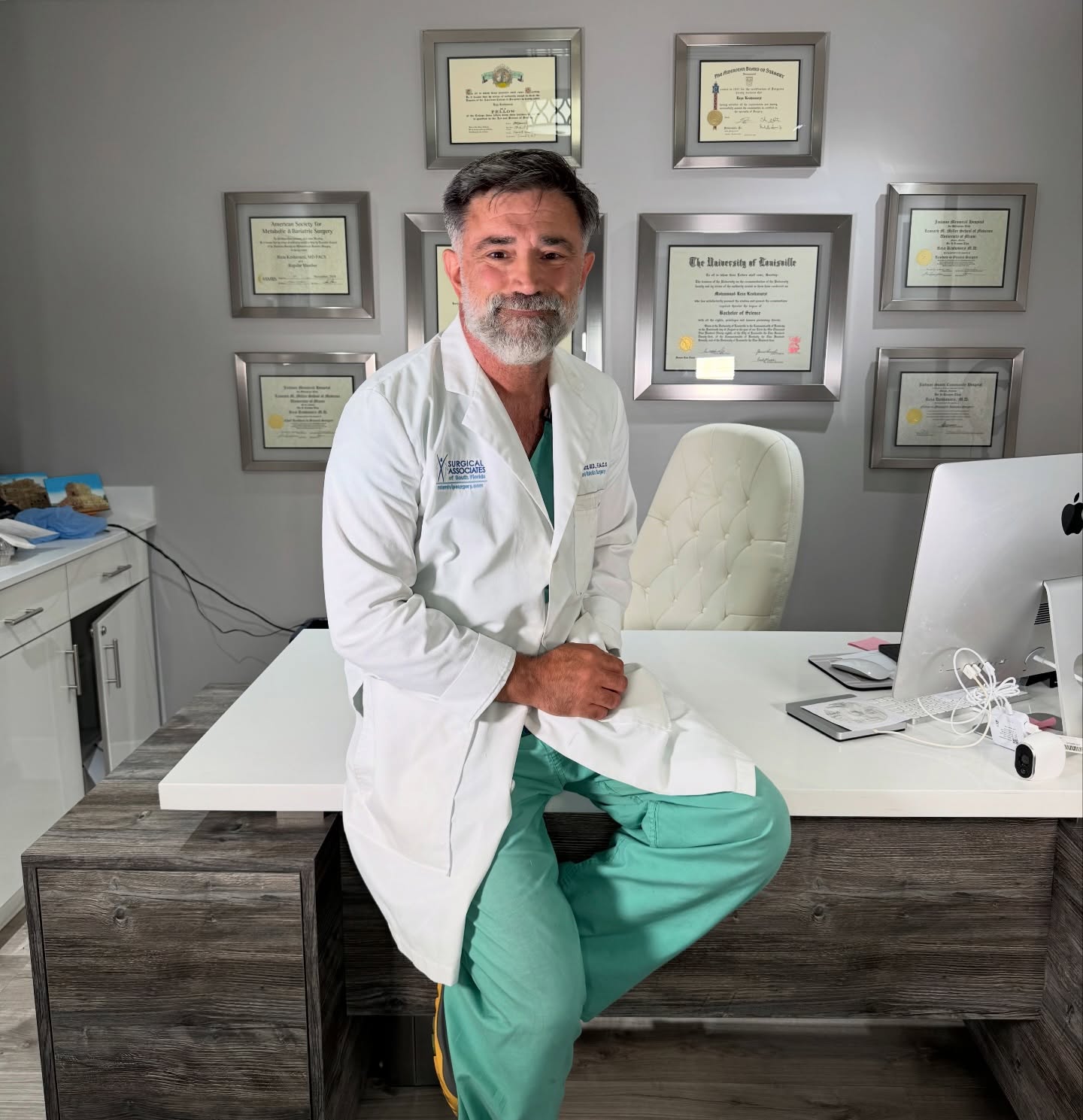
Board-Certified Bariatric Surgeon, MD, FACS, FASMBS
Revision means reading anatomy built years earlier and choosing between endoscopic and surgical tools. Dr. Keshavarzi performs both kinds of weight loss procedures, so his recommendation follows your anatomy rather than habit.
He completed his surgical residency at Jackson Memorial Hospital and a fellowship in laparoscopic, bariatric and robotic surgery at Jackson South Medical Center.
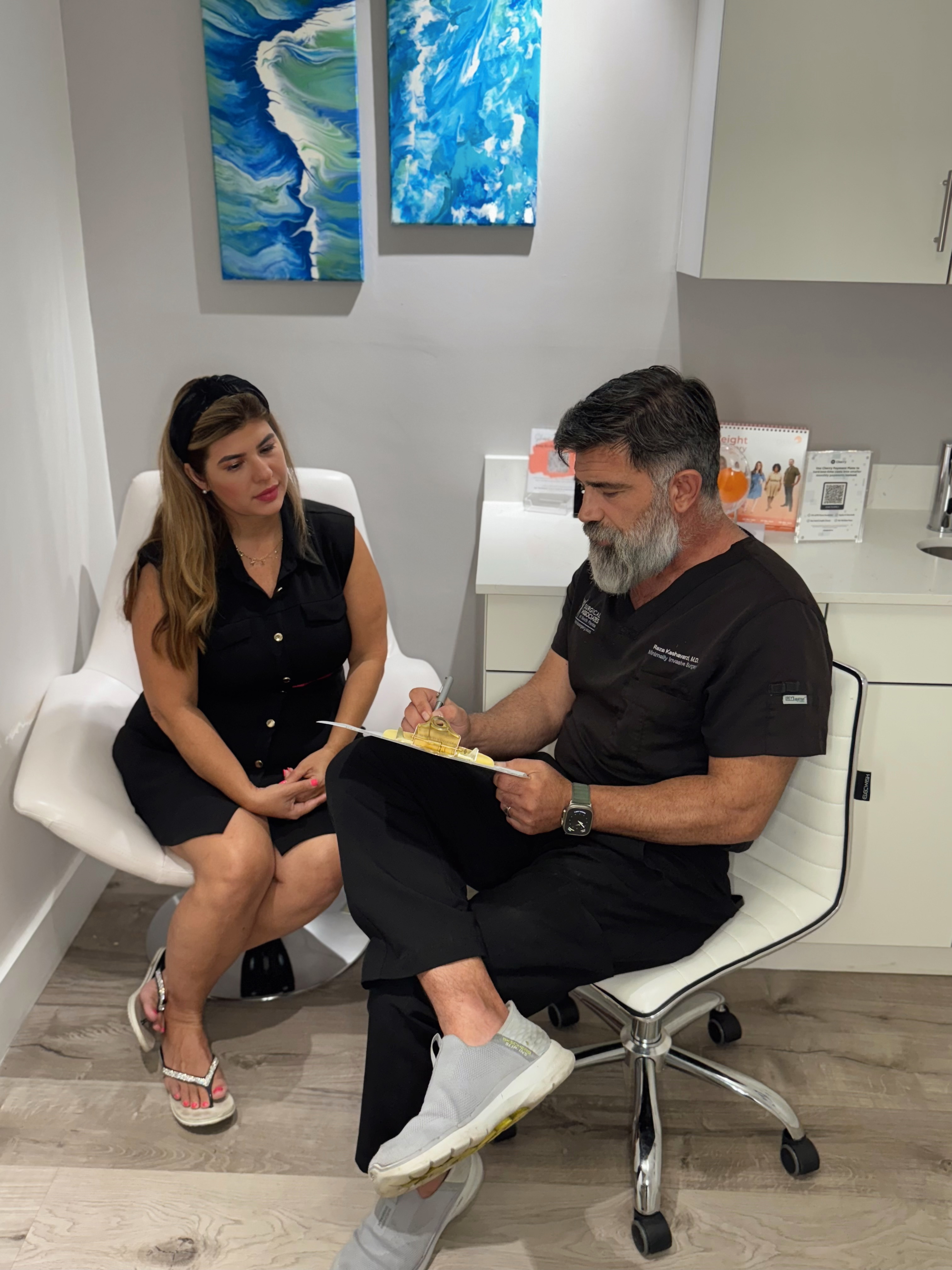
Dr. K reviews your original surgery, your weight history and what has changed. You leave knowing which tests you need and which options are realistic.
An upper endoscopy shows the pouch and outlet directly. Dr. K can perform it, or an EGD from the last 5 months is accepted. Results from our recommended doctor come back within 48 hours.
With the findings in hand, Dr. K recommends a reset, an endoscopic revision or a surgical revision and explains why. Your date depends on how quickly testing is finished.
A pre-surgery diet is required. GLP-1 injections are stopped at least 2 weeks before surgery.
Most patients return to work within 4 to 7 days and avoid lifting more than 20 lbs while healing. Your exact timeline depends on the type of revision.
The months after a revision decide how long the result lasts, so your plan rebuilds the structure that faded after your first bypass.
Your plan can range from no procedure to a laparoscopic operation, so you receive a quote once your evaluation shows which approach you need.
Our team walks you through financing options during your consultation.
"The doctor was very straightforward and honest and extremely professional."
Pat Cutting, Google review
"He has been there for me from the beginning of my journey until now."
Sherly Guillaume, Google review
"His timely communication and expert guidance were instrumental in helping me reach my health goals."
Jeff De La Cruz, Google review
Yes. A Roux-en-Y bypass can be revised endoscopically through the mouth or laparoscopically through small incisions. Dr. K recommends a route only after your endoscopy shows the state of the pouch and outlet.
Some regain after the first two years is common and often responds to a nutrition reset. Regain that keeps climbing, hunger soon after meals, or eating much larger portions than before point toward a change in the pouch or outlet. An EGD tells the two apart.
Often, yes. When the outlet or pouch has widened but the rest of the bypass is intact, sutures placed through an endoscope can tighten it without incisions. It is the newest approach most patients ask about and uses the same endoscopic suturing as the ESG procedure Dr. K performs.
Coverage for revision varies by insurance plan and usually depends on the medical reason for it, so check your benefits directly with your insurer. For costs you pay yourself, we offer financing through Cherry with 0% interest for 24 months.
For some patients, yes. When the anatomy looks normal, medical weight loss with a GLP-1 can restart progress, and some patients use it alongside a revision to protect the result. If you are having surgery, GLP-1 injections must be stopped at least 2 weeks beforehand.
Our office is at 7330 SW 62nd Pl, Suite 210, in South Miami, a short drive from most Miami neighborhoods. Your consultation, evaluation and follow-up visits all take place there with Dr. Keshavarzi.
Sit down with Dr. K, find out what has changed since your bypass and leave with a plan that fits your anatomy and your goals.